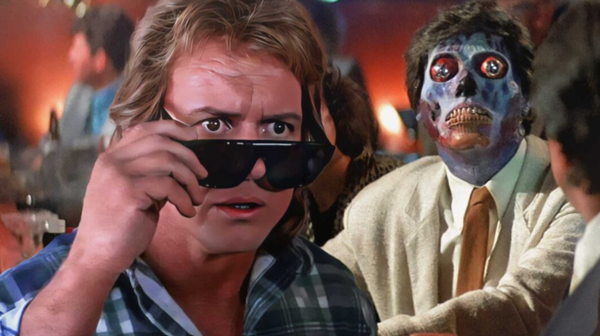
El-Sayed's Brotherhood
Michigan’s Senate Showdown has a Radical Muslim Elephant in the Room
There is a glaring question emerging from Michigan’s U.S. Senate race: Why hasn’t Republican Mike Rogers more directly confronted Democrat nominee Abdul El-Sayed over his reported leadership role in the Muslim Students Association (MSA)? Mahyar Entezari of the Middle East Forum (MEF) is available to discuss this and the organization’s historical associations and the national security implications critics have raised?
VISIT WWW.MEFORUM.ORG
- El-Sayed’s MSA leadership and alleged Muslim Brotherhood connections
- Mike Rogers’ failure to fully confront the MSA controversy
- Huma Abedin, Michele Bachmann and Rogers’ 2012 intelligence judgment
- Muslim Brotherhood influence in American institutions and campus organizations
- What Michigan voters deserve to know about El-Sayed’s associations
The issue deserves scrutiny as Rogers and El-Sayed clash over allegations involving the Muslim Brotherhood. Fox News’ coverage of their fiery debate highlights the controversy, but an important question remains: What does El-Sayed’s time as vice president of his university’s MSA reveal about his political and ideological influences—and what evidence actually connects that campus organization to the Brotherhood?
Critics have characterized the MSA as a Muslim Brotherhood front group, pointing to the movement’s historical influence on Islamist organizations in North America. The relationship, however, merits careful examination rather than assuming every MSA chapter or former officer shares the Brotherhood’s ideology. Entezari can help distinguish documented organizational history from allegations and explain what questions voters should demand candidates answer.
There is also a striking historical parallel involving Rogers himself. In 2012, when then-Rep. Michele Bachmann raised concerns about Huma Abedin’s alleged ties to the Muslim Brotherhood, Rogers—then chairman of the House Permanent Select Committee on Intelligence—called Abedin “an American patriot.” At the time, Abedin was a close adviser to Secretary of State Hillary Clinton. The controversy prompted House intelligence leaders to publicly disavow Bachmann’s allegations, as reported at the time by USA Today.
Given Rogers’ intelligence background, his response raises questions about how he evaluated those allegations, what evidence was available to him, and how his approach to suspected Brotherhood connections compares with his current scrutiny of El-Sayed.
Did Rogers apply the same evidentiary standard in both cases? Why did he defend Abedin against Bachmann’s accusations while now portraying El-Sayed’s alleged associations as a serious concern? And is the MSA connection receiving the attention it deserves—or is the debate focused too heavily on family ties and campaign rhetoric instead of verifiable organizational history?
Entezari can examine these questions through the lens of Islamist movements, national security and political accountability, offering audiences a deeper understanding of the Muslim Brotherhood’s historical reach and the evidence needed to assess claims about its influence in American institutions.
With Michigan’s Senate race drawing national attention, this is an opportunity to move beyond partisan accusations and investigate the record, the relationships and the unanswered questions.
Relevant Article(s):
5 explosive moments from fiery Michigan Senate debate between Rogers, El-Sayed | Fox News
House intel leaders disavow Bachmann allegations
OPTIONAL Q&A:
- Why hasn’t Mike Rogers more directly challenged El-Sayed over his former role as vice president of the Muslim Students Association?
- What documented evidence connects the MSA to the Muslim Brotherhood, and what does that history reveal about the organization?
- What should Michigan voters know about El-Sayed’s involvement with the MSA before deciding whether he is fit to serve in the U.S. Senate?
- Is Rogers applying a consistent standard when scrutinizing El-Sayed’s alleged Muslim Brotherhood connections compared with his 2012 defense of Huma Abedin?
- When Rep. Michele Bachmann raised concerns about Abedin’s alleged Muslim Brotherhood ties, why did Rogers call her an “American patriot”?
- As chairman of the House Intelligence Committee, what responsibility did Rogers have to investigate Bachmann’s allegations, and what can the public establish about how he handled them?
- Why did Rogers and other House intelligence leaders publicly reject Bachmann’s allegations, and what does that controversy reveal about how Washington evaluates potential Islamist influence?
- What specific questions should journalists press El-Sayed and Rogers to answer about the MSA, the Muslim Brotherhood and national security?
ABOUT MAHYAR ENTEZARI…
Mahyar Entezari is the Islamist Watch senior researcher at the Middle East Forum. His prior research focused on Islamism and other ideologies in Iran and Afghanistan. He has taught Middle Eastern studies at the University of Pennsylvania and the University of Texas at Austin, where he also earned his M.A. and Ph.D. WWW.MEFORUM.ORG
TO SCHEDULE AN INTERVIEW, CALL OR TEXT 512-966-0983 OR EMAIL BOOKINGS@SPECIALGUESTS.COM

260 Union Square NW, Suite #208
Hickory, NC 28601